


12 Best Balcony Railing Ideas for Modern Homes
- chrisarmo1
- Jun 9
- 6 min read
A balcony can either sharpen the whole look of a property or let it down completely. The best balcony railing ideas do more than finish an edge - they affect sightlines, natural light, safety, maintenance and the overall value of the job. Whether you are upgrading a home, pricing a development or sourcing systems for a client, the right balustrade choice needs to work hard on appearance and performance.
For most UK projects, the decision comes down to three things: how open you want the view to feel, how much ongoing maintenance you are prepared for, and what level of structural performance the setting demands. A small first-floor Juliet balcony has very different requirements from a large external terrace exposed to weather all year round. That is why the strongest results usually come from choosing a system, not just a style.
Best balcony railing ideas for clean, modern results
If the aim is a modern exterior with strong resale appeal, glass and metal systems continue to lead the market. They suit new-build homes, extensions, schemes of flats and commercial developments because they combine a crisp finish with dependable long-term durability. The detail matters here. A good-looking railing is not just about the infill panel. Posts, handrails, fixings and edge details all change the final result.
1. Frameless glass balustrades
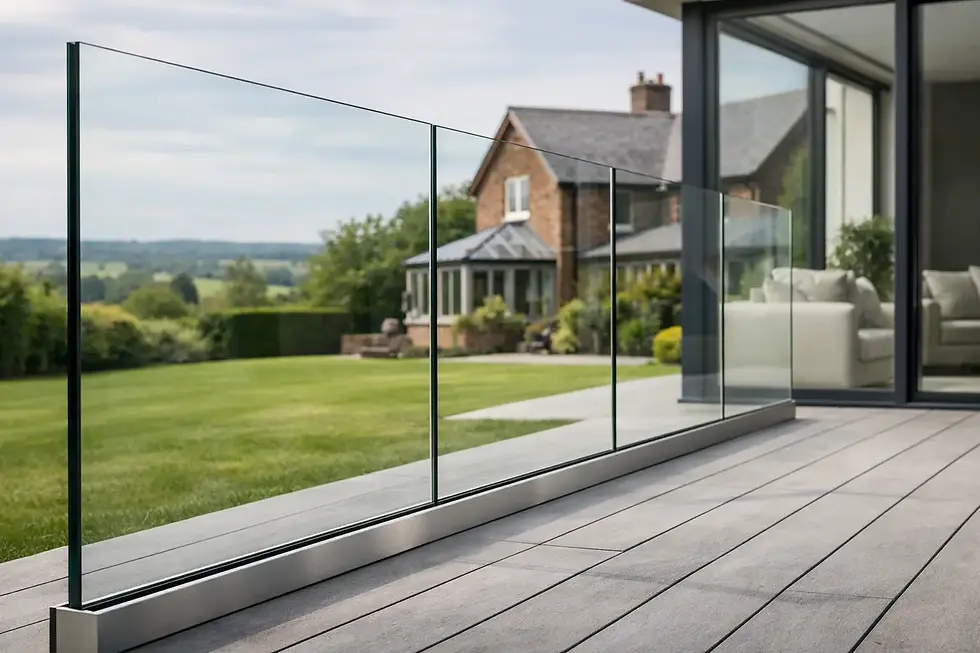
Frameless glass is one of the best options if you want uninterrupted views and a premium finish. It works particularly well on balconies overlooking gardens, countryside, water or city skylines because there is no heavy framework cutting across the line of sight. It also allows more daylight into the interior, which can make rooms behind the balcony feel noticeably brighter.
The main trade-off is cost. Frameless systems generally sit at the higher end because the glass specification, channel system and installation accuracy all matter. That said, for many homeowners and developers, the cleaner finish justifies the spend. It is a straightforward way to give a project a high-value appearance.
2. Stainless steel and glass railings
If you want a balance between modern design and visible structure, stainless steel posts with glass infill are a practical choice. This style gives you the openness of glass without the fully minimal look of frameless systems. It is especially useful where clients want a contemporary finish but still prefer a defined handrail and post arrangement.
316 grade satin polished stainless steel is a strong choice for external use thanks to its durability and corrosion resistance. For coastal or exposed locations, material quality becomes even more important. Cheap metalwork can quickly look tired outdoors, so this is not the place to cut corners.
3. Juliet glass balconies
For upper-floor openings where there is no walk-out platform, a glass Juliet balcony gives you security without blocking light. These are popular on bedroom renovations, loft conversions and rear elevations where clients want a clean, open look from both inside and outside the property.
A frameless Juliet design tends to look neater and more current than traditional metal bars. It keeps the façade lighter and avoids the boxed-in appearance that some older railing styles create. On modern houses and extensions, that can make a big difference.
4. Aluminium balcony railings
Aluminium is worth considering if low maintenance and cost control are high priorities. It is lighter than steel, resistant to rust and available in a wide range of finishes, which makes it useful for both residential and larger-volume development work.
The visual result depends heavily on the design. Slim, well-finished aluminium systems can look smart and contemporary, while bulkier budget options can feel more functional than architectural. If appearance is a major factor, it pays to compare profiles carefully rather than choosing on price alone.
Balcony railing ideas that suit different property styles
Not every project wants the same look. Some clients want maximum visibility. Others want a railing that feels more substantial and architectural. The best balcony railing ideas are the ones that fit the building as well as the budget.
5. Glass with a stainless steel top rail
This is a reliable middle ground for many UK homes. You keep the transparency of the glass, but the top rail gives a clear edge line and a more conventional handhold. It works well on family homes, rental properties and mixed-use schemes where practicality matters as much as appearance.
It can also make compliance and user confidence easier in some settings, particularly where people prefer a visibly defined barrier. From a commercial point of view, it is a popular option because it appeals to a wide range of buyers without looking dated.
6. Tinted or frosted glass panels
Clear glass is still the most common choice, but tinted and frosted panels have their place. Frosted glass can improve privacy on overlooked balconies, while tinted glass can soften glare and create a stronger design feature on contemporary elevations.
The compromise is obvious. As privacy goes up, openness tends to come down. If the main selling point of the balcony is the view, fully frosted glass may work against that. On the other hand, for urban plots and close neighbours, privacy can be the deciding factor.
7. Horizontal stainless steel bar railings
This style suits industrial, commercial and more utilitarian settings where glass is not essential. It offers a durable and cost-conscious solution with a clear structural look. In some schemes, especially secondary access areas or commercial units, that may be exactly the right answer.
For design-led residential projects, however, bar railings can feel visually busier than glass. They also block more of the view. If the project depends on a premium finish, glass usually comes out ahead.
8. Mixed metal and glass systems
Some of the strongest balcony designs combine materials rather than relying on one alone. Glass panels with steel posts, powder-coated frames or feature handrails can create a more bespoke appearance while still keeping the balcony open and practical.
This approach works well when a client wants the balcony to tie in with window frames, gates or external stair details. It gives more flexibility on colour and finish without losing the modern appeal that makes glass systems so popular.
How to choose the best balcony railing ideas for your project
A good-looking image online is not enough. The right system has to suit the site, the building and the level of use. Start with exposure. A sheltered balcony on a suburban extension will have different demands from a coastal block of flats or a high-level communal terrace.
Then think about who will use it. A private residential balcony may prioritise aesthetics and view, while a development or commercial scheme may need to place more weight on durability, repeatability and straightforward installation. Trade buyers usually need a system that is reliable to fit, easy to specify and consistent across multiple plots.
Budget should be handled honestly from the start. Frameless glass gives the cleanest finish, but it is not always the cheapest route. Post-and-glass systems can offer a strong visual result at a more accessible price point. Aluminium may help where speed, volume and lower maintenance matter most. There is no single best option for every project. There is only the best fit for the job in front of you.
Practical points that matter more than trend
Appearance gets the attention, but technical detail is what keeps a balcony performing properly. Glass thickness, fixing method, post centres, handrail design and base connection all need to be right. A balcony railing is a safety-critical element, not just a decorative feature.
That is why bespoke fabrication and proper technical backup make such a difference. Off-the-shelf components can work well for the right installation, especially for capable self-install buyers and trade customers, but more complex layouts often benefit from a made-to-measure approach. Corners, level changes, drainage details and substrate conditions can all affect the system you should choose.
It is also worth thinking about maintenance at the buying stage rather than later. Glass needs cleaning, particularly in exposed areas, and stainless steel benefits from routine care to keep its finish looking right. None of this is difficult, but it should be part of the decision. A balcony on a busy development or a seafront property needs materials that can cope with real conditions, not just showroom expectations.
Which balcony railing idea adds the most value?
In most cases, glass balustrades deliver the strongest combination of modern appearance, broad buyer appeal and practical performance. They make spaces feel larger, improve light flow and give a property a more polished finish. Frameless systems sit at the premium end, while stainless steel and glass combinations offer a strong balance of style and value.
For straightforward functionality, aluminium and stainless steel railings still have a place. They can be the right answer where budgets are tighter, sightlines are less important or the project needs a simpler installation route. The key is not chasing a trend for the sake of it. It is choosing a balcony system that improves the building and stands up to use.
If you are weighing up options for a home upgrade, a development or a trade supply requirement, get the specification right early. A well-made balcony railing should look sharp on day one, stay secure long term and make the whole property feel better finished. If you want clear advice, competitive pricing and nationwide support on glass and stainless steel balcony systems, UK Glass Products is worth speaking to before you make a final decision.


Comments