

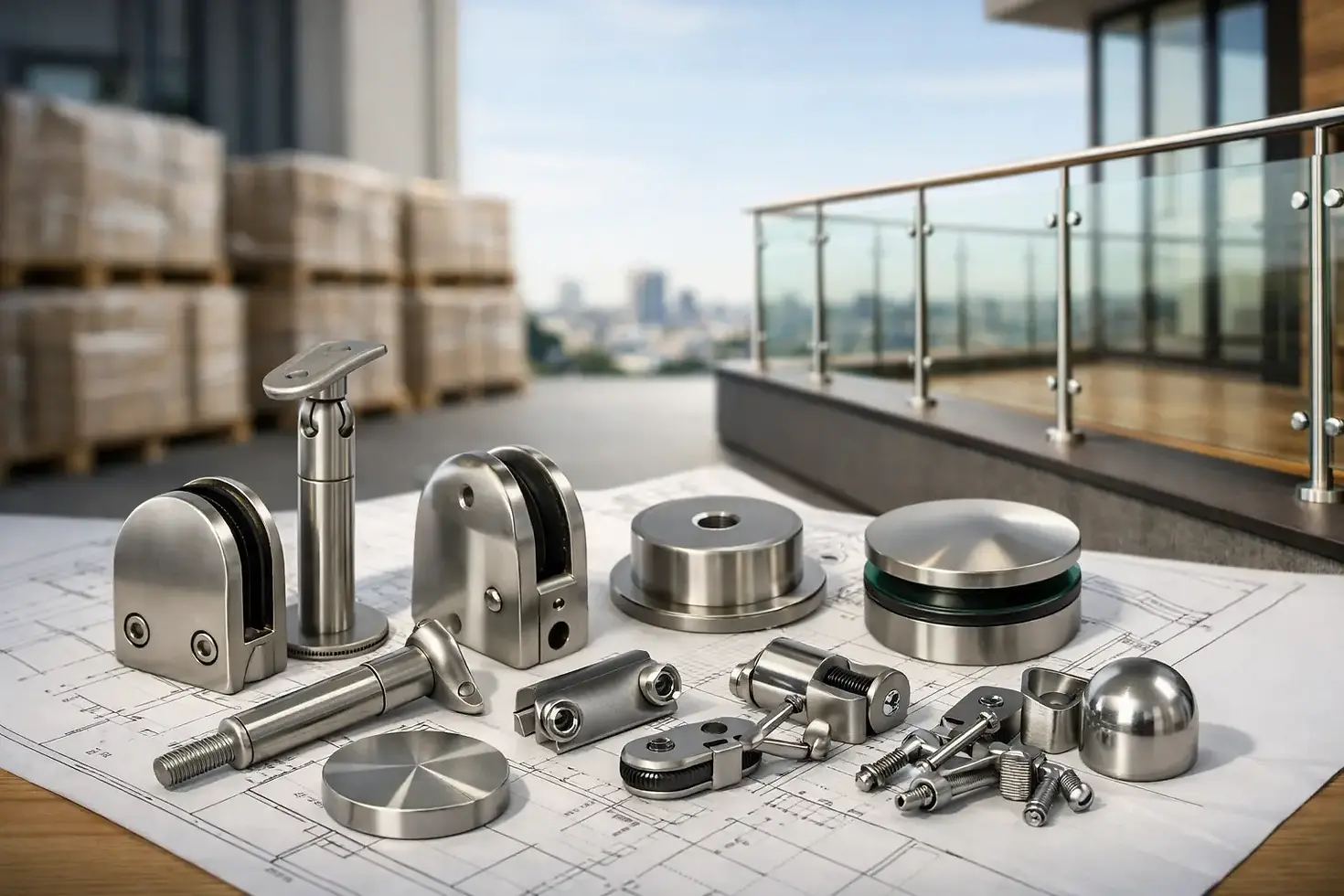
Trade Balustrade Component Supply for UK Projects
A missing glass clamp, mismatched handrail connector or unsuitable base plate can hold up an entire balcony, staircase or terrace installation. For contractors, fabricators and self-build customers, trade balustrade component supply is not simply about finding the lowest unit price. It is about receiving compatible, correctly specified parts that can be fitted without delays, uncertainty or costly rework.
UK Glass Products supplies architectural glass and stainless steel balustrade components for projects across the UK. Whether you need parts for a straightforward domestic stair run or a larger commercial scheme, the priority is clear: quality materials, practical advice and a supply service that keeps the job moving.
What trade buyers need from a component supplier
Trade buyers rarely need a generic basket of fittings. They need components that work together as a system and suit the site conditions. A balustrade beside an internal staircase has different demands from a coastal balcony, roof terrace or communal access area. The glass thickness, fixing method, handrail requirement and substrate all affect the parts required.
A dependable supplier should therefore be able to help establish the basics before an order is placed. That includes the intended layout, dimensions, glass specification, fixing surface and the level of exposure the installation will face. It also means being honest where a standard component is not the right answer and a bespoke fabricated item will give a better result.
Price matters, especially when quoting competitively for repeat work. However, an apparently cheaper fitting can become expensive if its finish degrades, its tolerances are inconsistent or it does not match the rest of the system. Trade supply should make estimating and installation simpler, not transfer risk to the installer.
Trade balustrade component supply: choosing the right parts
The right component selection begins with the balustrade type. Frameless glass systems, post-and-rail balustrades, wall-mounted handrails and staircase glass installations all use different combinations of hardware. Buying individual parts is useful when replacing or extending an existing system, but complete component schedules are often the safer option for new installations.
Stainless steel posts, handrails and connectors
Satin polished 316 grade stainless steel is a strong choice for many balustrade and handrail applications. It delivers the clean, contemporary appearance customers expect while offering better corrosion resistance than lower-grade alternatives. This is particularly relevant for external projects, properties near the coast and locations exposed to regular rain or pollution.
Posts can be surface mounted or side fixed, depending on the available structure and the desired sightline. Surface fixing is often practical where there is a suitable concrete slab, steelwork or substantial timber structure. Side fixing can preserve usable floor space and create a cleaner top edge, but it places different loads on the fixing zone and needs careful assessment.
Handrail tubes, elbows, end caps, adjustable connectors and wall brackets should be selected to match the tube diameter and intended geometry. A handrail with several direction changes may need adjustable fittings, while a simple straight run can use fixed connectors for a neater, more economical finish. The detail matters. Poorly aligned joints and mixed finishes are immediately noticeable on a glass balustrade.
Glass clamps, channel and glass fixings
Glass clamps are commonly used in post-and-rail systems to secure glass panels between stainless steel posts. They must suit the glass thickness and be fitted with the correct gaskets. The gaskets protect the glass and help achieve a secure fit, so they should not be treated as an optional extra.
For a minimal-framed look, base channel systems can support glass from below without visible posts. This creates excellent sightlines for balconies, terraces and contemporary staircases, but the channel, glass and fixings must be specified as a complete arrangement. The substrate is equally important. A well-made channel cannot compensate for an unsuitable slab edge or inadequate fixing detail.
Standoff fixings and point-fixed glass hardware can provide a more architectural finish on selected projects. They are not automatically the best choice, however. These systems require accurate glass drilling, precise setting out and suitable support structure. They may look simple once installed, but the preparation is less forgiving than a conventional clamped system.
Fixings are part of the system, not an afterthought
Anchors, bolts, resin fixings and packers are often the least visible elements of a balustrade, yet they are central to performance. The fixing type should be chosen for the actual substrate, whether that is reinforced concrete, structural steel, masonry or engineered timber. Site conditions can vary even within one project, particularly on refurbishments.
Avoid assuming that one fixing suits every base. Hidden voids, weak edges, uneven surfaces and unknown construction can affect what is appropriate. Where there is doubt, verify the structure before ordering or fitting. This protects the installer, the client and the finished installation.
Glass specification and safety considerations
Balustrade glass must be specified for its application, dimensions, support method and relevant safety requirements. Thickness alone does not tell the full story. Toughened, laminated and toughened laminated glass have different characteristics, and the correct choice depends on how the panel is retained and what it is designed to do.
For example, a framed panel held in clamps has different design considerations from a frameless panel fixed in channel. An internal stair screen may call for a different solution from an elevated external barrier. If the glass forms a safety-critical barrier, do not rely on assumptions or copy a detail from another job without checking that it suits the new layout.
A clear drawing, accurate dimensions and photographs of the site can prevent most ordering errors. They allow the supplier to identify likely issues before fabrication or despatch, such as awkward corners, non-standard angles, handrail breaks and restricted fixing positions. This is faster and less expensive than trying to alter finished glass on site.
When standard components are the best option
Off-the-shelf balustrade components are ideal for many jobs. They are particularly useful for standard handrail runs, replacement fittings, straightforward post systems and experienced installers who already know the components they require. They also give DIY customers a practical route to building a high-quality system with professional-grade materials.
Standard parts offer speed and cost control, but only where the project is genuinely standard. A terrace with uneven levels, a stair with unusual pitch angles or a balcony with a complex waterproofing detail may need bespoke posts, fabricated brackets or a designed system. Trying to force standard parts into a non-standard setting can create poor alignment and unnecessary installation time.
The most cost-effective route is not always the item with the lowest purchase price. It is the route that reduces cutting, adaptation, returns and site visits while delivering the specified appearance.
Better ordering means fewer site problems
Before requesting a quote or placing an order, provide as much practical information as possible. Overall dimensions, glass sizes, post centres, photographs, a simple sketch and details of the fixing surface all help. If handrails are required, identify the tube size, finish, corner arrangements and whether wall returns or end caps are needed.
For repeat trade work, it is worth standardising preferred components where possible. Consistent tube diameters, clamp styles and finishes make estimating easier and create a recognisable quality level across your projects. There will still be exceptions, but a standard approach reduces the chance of ordering incompatible parts under time pressure.
Delivery planning also deserves attention. Long handrail lengths, glass panels and fabricated steelwork need suitable handling at site. Confirm access, storage space and who will be available to receive the delivery. A component order arriving before the installation team is ready can be as disruptive as one arriving late.
Support that works for installers and clients
A good trade supplier does more than despatch boxes. Technical backup can help when a customer changes a layout, an existing system needs matching or a site measurement raises a question. That support is especially valuable when trade customers are balancing programme dates, client expectations and a fixed installation budget.
UK Glass Products combines component supply with bespoke fabrication and fitting experience. That means advice is grounded in the realities of installation, from selecting 316 grade stainless steel fittings to working out a practical glass and handrail arrangement. Trade customers can buy the parts they need, while more complex projects can be quoted as a supplied or fully fitted solution.
If you are pricing a balustrade, staircase glass screen, Juliet balcony or external handrail, send over the dimensions, photographs and specification requirements early. The right components should make the finished installation look straightforward, even when the planning behind it has been anything but.


Comments