


Best Balustrade Finishes for Outdoors in the UK
A balustrade can look excellent on the day it is fitted, then quickly lose its appeal if the finish is wrong for the location. Choosing the best balustrade finishes for outdoors is not just about matching the property. It affects staining, corrosion resistance, cleaning time, long-term cost and how well the system continues to perform through British weather.
For a balcony, terrace, raised decking area or external staircase, the best choice depends on exposure. A sheltered garden installation has very different demands from a coastal balcony, a pool surround or a commercial entrance receiving constant foot traffic. The material, grade and surface finish all need to work together.
What makes an outdoor balustrade finish suitable?
Outdoor balustrades are exposed to rain, frost, ultraviolet light, airborne dirt and temperature changes. In coastal areas, salt in the air creates an added corrosion risk. In towns and cities, traffic pollution can leave deposits on metal and glass, while shaded gardens may encourage algae and surface staining.
A suitable finish should protect the underlying material while remaining practical to maintain. It should also suit the balustrade design. Frameless structural glass needs carefully specified stainless steel fixings, whereas a post-and-rail system gives more opportunity to use coloured aluminium or painted steel.
The appearance matters, but a cheap-looking or poorly specified finish rarely stays cheap. Replacing corroded clamps, repainting chipped posts or dealing with stained handrails can cost more than selecting the correct system at the outset.
Satin 316 stainless steel: the leading choice for handrails and fittings
For many external glass balustrades, satin polished 316 grade stainless steel is the sensible all-round choice. It provides a clean, contemporary appearance without the highly reflective look of mirror-polished steel, and it works particularly well with clear glass panels, timber decking, porcelain patios and rendered walls.
Grade 316 stainless steel is commonly known as marine-grade stainless steel because it has stronger corrosion resistance than standard 304 grade. That makes it the preferred option for external handrails, posts, clamps, brackets and channel components, especially where rainwater, damp conditions or coastal air are likely to be factors.
Why satin polish works outdoors
A satin finish is more forgiving than a bright polished surface. It disguises light fingerprints, water spotting and fine marks better, which is valuable on frequently used balconies and stairways. It also gives a consistent architectural finish that complements modern and traditional properties alike.
Stainless steel is not maintenance-free. Surface contamination can still cause tea staining, particularly near the sea or in polluted locations. Regular washing with warm water, a mild detergent and a soft cloth is normally enough for routine care. Avoid wire wool, harsh abrasives and chlorine-based cleaners, as these can damage the protective surface layer.
For exposed installations, specify 316 grade rather than assuming all stainless steel is equal. This is one of the most important practical decisions in an outdoor balustrade project.
Powder-coated aluminium: strong colour choice with low upkeep
Powder-coated aluminium is a popular finish for aluminium balustrades, framed systems and certain handrail designs. It is lightweight, corrosion-resistant and available in a broad range of colours, from subtle greys and blacks to more distinctive architectural shades.
Anthracite grey, black and white remain common choices for UK homes, but the right colour should relate to window frames, doors, guttering, fencing and external joinery. A well-selected powder coat can make a balustrade feel built into the property rather than added as an afterthought.
The quality of the coating matters
Powder coating is not simply a colour decision. The preparation of the aluminium and the quality of the coating process determine how well the finish resists fading, chalking and chips. For exposed projects, ask for an architectural-grade powder-coated finish suitable for external use.
Darker colours can show dust, water marks and pollen more readily than lighter tones. They can also become noticeably hotter in direct sunshine, which may matter for a handrail on a south-facing terrace. Lighter finishes usually conceal dust better, though they can show mud splash and urban grime.
Aluminium is a practical choice where a coloured, low-maintenance frame is wanted. It is less suited to projects aiming for the refined metallic appearance of stainless steel, but it offers far more freedom in colour and can be highly cost-effective on larger runs.
Painted steel: suitable only with the right preparation
Mild steel balustrades can be fabricated into traditional or bespoke designs, including vertical railings, decorative panels and heavier architectural sections. However, steel needs a properly specified protective system before it is used outdoors.
For lasting performance, galvanising followed by a suitable powder coat or paint system is generally the safer route. Galvanising protects the steel beneath the finish, helping to reduce the risk of corrosion if the top layer is scratched. A simple site-applied paint finish on untreated steel is unlikely to offer the same lifespan in a wet UK setting.
Painted steel can be an effective option for period homes, commercial sites or projects that need a specific fabricated profile. It does need closer attention than 316 stainless steel or aluminium. Chips should be repaired promptly before moisture gets underneath the coating and corrosion begins to spread.
Glass finishes for outdoor balustrades
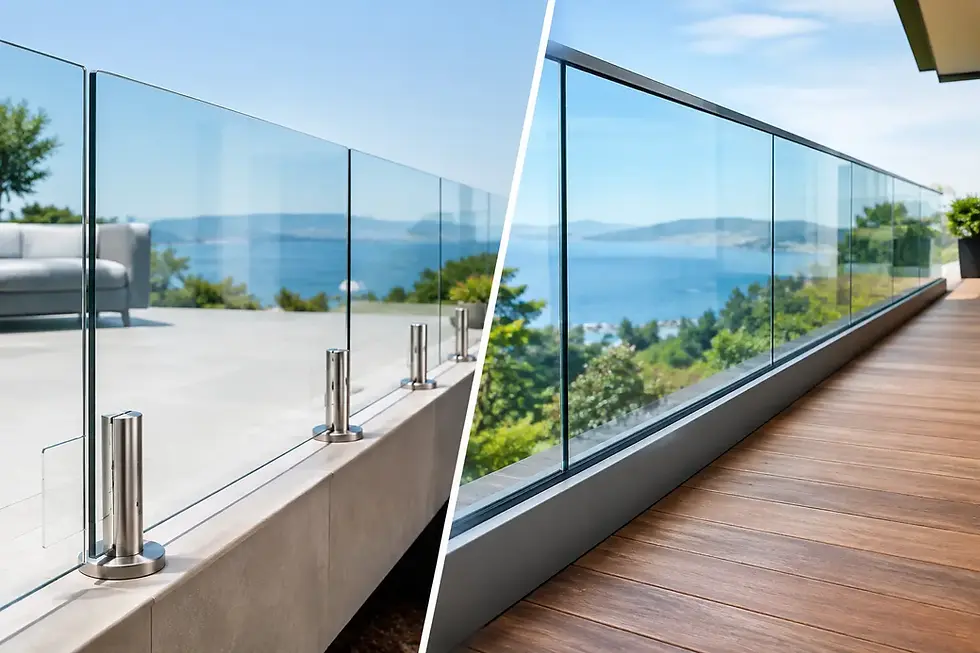
The glass itself is a finish choice as well as a safety component. Clear toughened laminated glass remains the most requested option because it protects views and brings light through balconies, decking and terraces. It suits contemporary homes particularly well and avoids making a small outdoor area feel enclosed.
Low-iron glass is worth considering where the clearest possible appearance is required. Standard glass can show a faint green tint, most noticeably on exposed panel edges. Low-iron glass reduces this effect and gives a more neutral, premium look, although it comes at a higher price point.
Tinted, frosted or obscured glass can improve privacy where homes overlook each other or where a balcony faces a busy pavement. The trade-off is reduced visibility and, in some cases, a more frequent need for cleaning. Frosted finishes can hold water marks and dirt more visibly than clear glass, while darker tints reduce light levels.
For any external glass balustrade, the glass specification must be appropriate for the fixing method, panel size, wind exposure and relevant building requirements. The finish should never be chosen separately from the engineering.
Matching finishes to the location
The best finish changes with the setting. For a typical domestic patio or garden deck, clear glass with satin 316 stainless steel posts and handrails is a reliable, smart-looking specification. It offers good durability, straightforward maintenance and a finish that works with most external materials.
For a coastal property, 316 stainless steel should be the starting point for metalwork, combined with a regular cleaning plan. Salt deposits must not be allowed to remain on rails, clamps or brackets. Aluminium can also perform well, provided the powder coat is specified for the environment and any cut edges or fittings are properly protected.
For a contemporary balcony where colour coordination is central to the design, powder-coated aluminium framing can be the stronger visual choice. Black-framed glass balustrades are particularly effective against pale render, modern brickwork and large glazed elevations. Check that the coating is suitable for the level of exposure rather than selecting purely on colour.
For commercial entrances and public-facing stairs, durability and ease of replacement become especially important. Satin 316 stainless steel handrails combined with safety glass are hard-wearing, professional and easy to keep presentable. Where steel is required for the design, use a properly galvanised and coated system rather than a basic painted finish.
Do not overlook fixings, drainage and cleaning
A good finish can still fail early if the installation details are poor. Water must be able to drain away from base channels, posts and brackets. Trapped moisture encourages staining and corrosion, while dirt collecting around fixings makes a premium system look neglected.
Mixed metals also need careful consideration. Using incompatible fixings or allowing different metals to sit in wet contact can increase corrosion risk. A complete balustrade system should use compatible components designed to work together, not a collection of unrelated parts bought on appearance alone.
Cleaning should be built into the ownership decision. Glass benefits from regular washing to remove rain spotting, pollen and grime. Stainless steel should be wiped down more frequently in coastal or urban locations. Powder-coated aluminium only needs simple cleaning in most cases, but should not be attacked with abrasive pads or aggressive solvents.
Choose the finish around the whole specification
The strongest outdoor balustrade projects are specified as complete systems: the glass, handrail, posts or channel, clamps, fixings and substrate all considered together. This avoids a common mistake - selecting a visually attractive finish before checking whether it is appropriate for the site and structural arrangement.
UK Glass Products supplies and fits bespoke external glass and stainless steel balustrade systems nationwide, with 316 grade satin polished stainless steel options, technical support and competitive quotations for homeowners and trade customers. A survey or detailed project discussion can identify exposure issues before fabrication starts.
For most UK outdoor installations, clear safety glass paired with satin 316 stainless steel remains the dependable benchmark. If colour, privacy or a particular architectural style changes the brief, powder-coated aluminium, coated steel or alternative glass finishes can be the right answer - provided the specification is designed for the site, not just the showroom image. Get the finish right first, and the balustrade will keep earning its place long after the project is complete.


Comments