


What Is a Glass Juliet Balcony?
French doors on an upper floor can transform a room, but without a barrier across the opening, they are not practical or safe. That is usually where people ask, what is a glass Juliet balcony? In simple terms, it is a fixed safety barrier fitted externally across full-height doors or large window openings, giving you the look and light of a balcony without a projecting platform.
For homeowners, developers and trade buyers, a glass Juliet balcony is often the cleanest way to add protection, improve the elevation and keep the view open. It suits modern extensions, new-build plots, loft conversions and renovation projects where space is limited or where a full balcony is not structurally necessary. It also tends to be a more cost-effective option than building a walk-on balcony, which is one reason it remains a popular choice across the UK.
What is a glass Juliet balcony and how does it work?
A glass Juliet balcony is a non-walk-on balustrade system installed directly outside an opening, most commonly bifold doors, French doors or large first-floor windows. Its job is straightforward. It creates a secure barrier at height while still allowing the doors to open inward and, in many cases, outward depending on the design and fixing position.
Unlike a traditional balcony, there is no deck, floor projection or usable standing area. You cannot step out onto it. The system is there to provide fall protection, maintain airflow and preserve a clear line of sight.
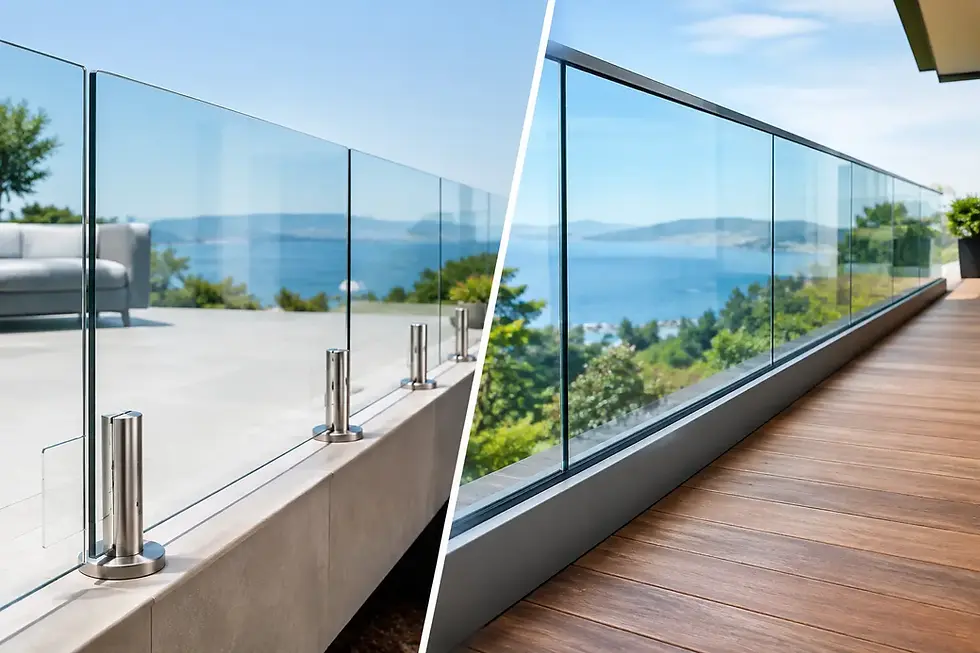
The glass panel is usually toughened laminated safety glass, supported by stainless steel or aluminium fixings. Frameless systems are especially popular because they give a cleaner finish and avoid vertical posts interrupting the view. On the right property, that can make a noticeable difference both inside and out.
Why choose glass instead of metal?
A standard metal Juliet balcony does the same basic job, but glass changes the look completely. Instead of bars or rails cutting across the opening, you get transparency, better daylight and a more contemporary finish. That matters on modern homes, flat schemes and extensions where people want to maximise glazing and keep elevations looking sharp.
There is also a practical side to it. Glass works particularly well when the opening overlooks a garden, countryside view or coastal setting. You are not spending money on large doors only to block part of the outlook with metalwork. For many customers, that is the deciding factor.
That said, it depends on the project. If the priority is the lowest possible upfront cost, a basic metal system may come in cheaper. If the goal is appearance, light and resale appeal, glass generally offers better value.
Where are glass Juliet balconies used?
You will see glass Juliet balconies on all kinds of properties across the UK. They are common on first-floor bedrooms, stair landings, rear extensions, barn conversions and flat developments. They are also a strong option where planning, structural constraints or budget rule out a full balcony.
For homeowners, they are often specified when replacing old windows with French doors to bring in more air and natural light. For builders and developers, they are a reliable way to meet safety requirements on upper-floor openings without complicating the build with a larger steel structure.
They are especially useful on tight sites. If there is no room for a projecting balcony, or if projections would interfere with access below, a Juliet system gives you the visual benefit of a balcony line without taking up external space.
Main benefits of a glass Juliet balcony
The biggest benefit is simple - it lets you open up an upper-floor room safely. That can make a smaller bedroom or landing feel lighter and less enclosed, especially in loft conversions where daylight is valuable.
Appearance is another major advantage. A well-made glass Juliet balcony gives a property a cleaner, more expensive look. Frameless systems are particularly effective on contemporary builds, while stainless steel supported options can work well on mixed-style properties where a little more definition is wanted.
There is also the issue of maintenance. Glass and quality stainless steel are durable materials when specified correctly. In UK conditions, that matters. Marine-grade or 316 grade stainless steel is often preferred for its corrosion resistance, particularly in exposed or coastal areas.
From a buying point of view, a glass Juliet balcony can be a practical middle ground. You get the visual impact of a balcony feature, the required barrier protection and a relatively straightforward installation compared with a walk-on platform system.
What is a glass Juliet balcony made from?
Most quality systems use toughened laminated glass. This is important because the panel is acting as a protective barrier at height. Laminated construction helps hold the panel together if damage occurs, which is one reason it is commonly specified for this type of application.
The fixings will vary depending on the system. Some use stainless steel clamps and handrails, while others use frameless channel or button-fix designs. The right choice depends on the opening width, building substrate, exposure level and the look you want to achieve.
This is where a specialist supplier matters. A Juliet balcony is not just a piece of glass bolted to a wall. The glass specification, loading requirements, fixing detail and installation method all need to suit the project. On straightforward openings, an off-the-shelf kit can work well. On wider spans or bespoke builds, made-to-measure fabrication is usually the better route.
Safety, building regulations and compliance
Any system installed at height needs to be taken seriously. A glass Juliet balcony is a safety product first and a design feature second. The system must be manufactured and fitted properly, with the correct glass type and suitable fixings for the structure it is being attached to.
In the UK, compliance with relevant building regulations and load requirements is a key part of the job. The required barrier height, loading performance and fixing integrity all need to be considered. It is not a one-size-fits-all purchase, especially on older buildings where the substrate may need checking before installation.
For trade customers, this is usually understood from the outset. For homeowners, the main point is simple - cheap pricing only works if the specification is right. If the glass, fixings or supports are under-specified, the system may not be suitable. A proper quote should reflect the real requirements of the opening, not just the width of the doors.
Frameless or framed - which is better?
Frameless glass Juliet balconies are the most in-demand option because they offer the cleanest finish. They suit modern homes, new extensions and projects where uninterrupted views are the priority. Visually, they are hard to beat.
Framed or semi-framed systems still have their place. They can be a good choice where a handrail is preferred, where the property style is more traditional, or where the budget needs tighter control. Some buyers also simply prefer the more defined appearance of visible stainless steel fittings.
There is no universal best option. It depends on the opening, the building style and what matters most to you - minimum visual obstruction, a particular design detail, or cost.
What affects the price?
Glass Juliet balcony prices vary according to size, glass specification, fixing type and installation requirements. Wider openings generally cost more because the loads and detailing change. Bespoke fabrication, site access and the condition of the fixing substrate can also affect the final figure.
A supply-only kit can be a sensible route for experienced installers and competent self-build customers. A supply-and-fit service is often the safer option for homeowners who want the full system measured, manufactured and installed by one specialist.
The cheapest quote is not always the best quote. You need to know what is included, what grade of stainless steel is being used, whether the glass is correctly specified and whether technical backup is available if the opening details change.
What to check before you buy
Start with the basics. Measure the opening, identify the wall construction and think about how the doors open. Then look at the finish you want and whether a frameless design is realistic for that location.
If the property is exposed to harsher weather or close to the coast, material quality becomes even more important. So does installation experience. A Juliet balcony has to look right, but it also has to perform properly year after year.
For developers and contractors, consistency of supply matters just as much. Lead times, fabrication accuracy and technical support can make the difference between a smooth programme and site delays. For homeowners, the priority is usually a clear quote, the right advice and confidence that the system will be compliant and built to last.
If you are weighing up options for a property upgrade or a live project, a glass Juliet balcony is one of the most effective ways to add safety and modern kerb appeal without the cost and complication of a full balcony. If you want straight answers on sizing, specification or fitting, UK Glass Products can quote for both bespoke and standard systems nationwide.


Comments