

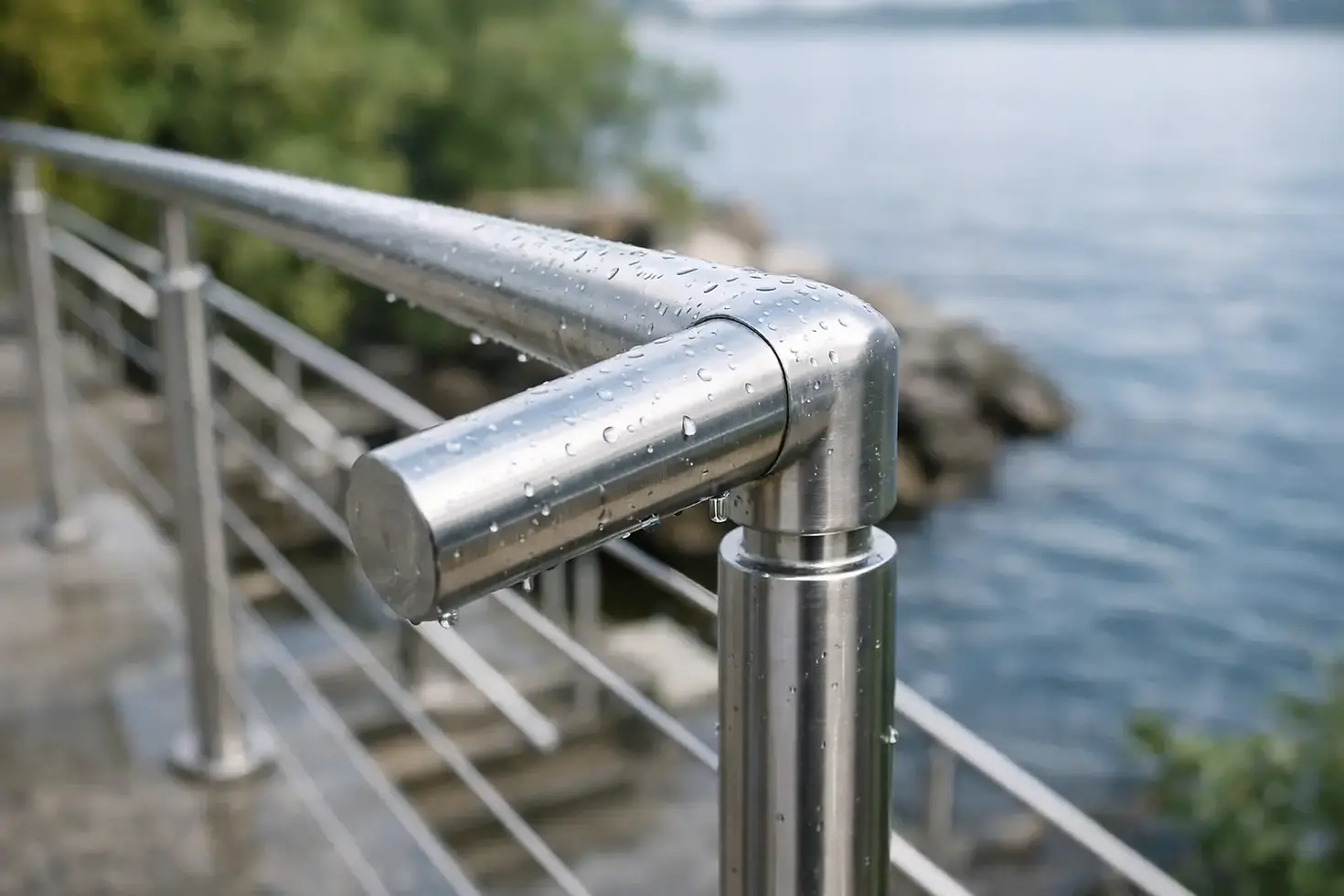
Do Stainless Handrails Rust Outdoors?
A handrail can look perfect on the day it is fitted, then start showing brown marks a few months later and leave people asking the same question - do stainless handrails rust outdoors? The short answer is yes, they can, but not in the way many people expect. Good quality stainless steel is designed to resist corrosion, not make it impossible. Outdoors, the grade, finish, location and maintenance all make a difference.
For homeowners, builders and trade buyers, that matters because not all stainless handrails are equal. If you are comparing quotes or buying components for a balcony, terrace, steps or garden run, the material specification is not a detail to skip over. It is one of the main factors that decides whether the installation still looks sharp in a few years or starts letting the whole project down.
Do stainless handrails rust outdoors in the UK?
Yes, stainless handrails can rust outdoors in UK conditions, but proper material selection greatly reduces the risk. Rain, airborne pollution, coastal salt, cleaning chemicals and general contamination can all attack the surface over time. What most people call rust is often tea staining, which appears as brown discolouration on the surface rather than deep structural corrosion in the early stages.
That distinction matters. Surface staining does not automatically mean the handrail has failed, but it does tell you the environment is more aggressive than the steel can comfortably handle, or that the finish has been contaminated during fabrication, fitting or cleaning. If ignored, cosmetic staining can progress and become harder to remove.
In practical terms, outdoor stainless steel performs very well when the right grade is used in the right setting. In exposed locations, especially around the coast, lower grade material is a false economy.
Why outdoor stainless steel still stains or corrodes
Stainless steel protects itself with a thin passive layer on the surface. If that layer stays intact, the metal resists corrosion extremely well. If it is damaged, contaminated or constantly attacked by salt and moisture, brown marks can start to appear.
The biggest issue is usually not that stainless steel is poor quality in general. It is that the wrong specification has been chosen for the environment. A handrail fitted beside a sheltered domestic entrance has different demands from one installed on a sea-facing balcony or an exposed commercial staircase.
Fabrication and installation also play a part. If stainless components are handled with tools that have been used on mild steel, tiny iron particles can become embedded in the surface. Those particles rust first, making the stainless look like it is failing. Cheap fittings, poor polishing, rough welds and neglected maintenance can all shorten the clean lifespan of the handrail.
304 vs 316 stainless steel for outdoor handrails
If you are choosing between grades, this is where the real answer sits. Grade 304 stainless steel is commonly used and offers decent corrosion resistance for many internal and some sheltered external applications. Grade 316 contains molybdenum, which gives it better resistance to chlorides and harsher outdoor conditions.
For external balustrades and handrails in the UK, especially where reliability and appearance matter, 316 grade is the stronger choice. It is better suited to rain exposure, urban pollution and coastal environments. That is why many higher quality architectural handrail systems use 316 grade satin polished stainless steel as standard.
This is not just a spec sheet argument. If you are pricing a project properly, 316 often works out better value over time because it reduces the chance of complaints, remedial cleaning and premature replacement. On a residential job, it protects the finish. On a trade or development project, it helps avoid call-backs.
When 304 may still be used
There are cases where 304 is acceptable, such as very sheltered locations with low exposure. Even then, it depends on the exact site conditions and the client’s expectations. If the handrail is a visible design feature and expected to stay clean with minimal fuss, upgrading to 316 is usually the safer commercial decision.
Why 316 is the preferred outdoor option
316 does not mean maintenance-free and it does not make the steel immune to staining. What it does offer is a stronger level of corrosion resistance where outdoor systems are exposed to weather, contaminants and regular use. For external stairs, balconies, terraces and perimeter areas, it is generally the right place to start.
Coastal properties and high-exposure sites
This is where many problems begin. Sea air carries chlorides, and chlorides are bad news for stainless steel if the grade is not up to the job or the handrail is not maintained. Even properties that are not directly on the seafront can be affected if they are close enough to pick up salt-laden air.
The same applies to busy roadside sites, commercial premises and industrial areas where airborne contamination is higher. In these conditions, stainless steel needs to be specified with more care. Grade 316 is strongly recommended, and regular washing becomes more important.
For developers and contractors, this is one of those decisions that should be made before fabrication starts, not after staining appears. A cheaper rail that needs attention early is rarely the cheaper option by the time the project is finished.
Finish matters as much as grade
A satin polished finish is a popular choice for outdoor handrails because it gives a clean architectural look while being practical to maintain. The surface texture helps disguise minor marks better than a highly reflective mirror finish, which tends to show every fingerprint, smear and imperfection.
A better finish also helps from a corrosion point of view. Smooth, well-finished surfaces are easier to clean and less likely to trap contaminants. Rough areas, inconsistent polishing and poor weld finishing create places where moisture and dirt can sit.
That is one reason specialist fabrication matters. Outdoor stainless is not just about ordering tube and fittings. It is about getting the grade, finish and assembly quality right from the start.
How to stop stainless handrails rusting outdoors
Prevention is straightforward if the handrail is specified correctly and looked after sensibly. The first step is choosing 316 grade stainless steel for external use, particularly for exposed UK locations. After that, correct fabrication, careful installation and routine cleaning do most of the work.
Cleaning does not need to be complicated. In many settings, washing the handrail periodically with warm water and a mild detergent is enough to remove grime, salt and surface contaminants. The frequency depends on the location. An inland garden handrail may need very little attention, while a coastal balcony will need more regular cleaning.
Avoid harsh cleaners, bleach and abrasive pads that can damage the surface. If staining does appear, it should be dealt with early using suitable stainless steel cleaning products and methods. Leaving it to build up is what turns a minor issue into a visible problem.
Signs your handrail specification may be wrong
If a relatively new outdoor handrail starts showing rust-coloured marks quickly, there is usually a reason. It may be the wrong grade for the environment, contamination from tooling or site work, poor quality fittings, or a lack of cleaning in a high-exposure area.
Brown staining around joints, welds or fixings can be an early warning sign. So can patchy discolouration on exposed sections while sheltered parts remain clean. These patterns often point to local contamination or environmental exposure rather than a general defect in all stainless steel.
For anyone sourcing systems commercially, this is where buying on headline price alone can become expensive. A properly manufactured system with the right grade and technical support behind it is usually the safer purchase.
What buyers should ask before ordering
If you are comparing outdoor handrail systems, ask what grade of stainless steel is being supplied, whether it is suitable for your exact location and what finish is included. Also ask whether the supplier provides technical backup on installation and aftercare.
That applies whether you need a fully fitted balustrade, a bespoke handrail or DIY components for self-installation. The specification should match the site, not just the budget target. A no-nonsense supplier should be able to tell you quickly whether your project needs 316 grade and what maintenance to expect.
For nationwide projects, consistency matters as well. Homeowners want confidence that the rail will keep its appearance. Builders and developers want dependable supply, straightforward quoting and products that do not create avoidable issues after handover. That is why specialist systems built around 316 grade satin polished stainless steel remain the sensible option for many outdoor applications.
If you are planning an exterior handrail, balustrade or staircase project, treat stainless steel as a performance material rather than a generic metal choice. Get the grade right, get the finish right, and the handrail has every chance of staying clean, safe and fit for purpose for the long term. If you want clear advice on the right outdoor specification, UK Glass Products can quote for both bespoke and standard systems across the UK.


Comments