

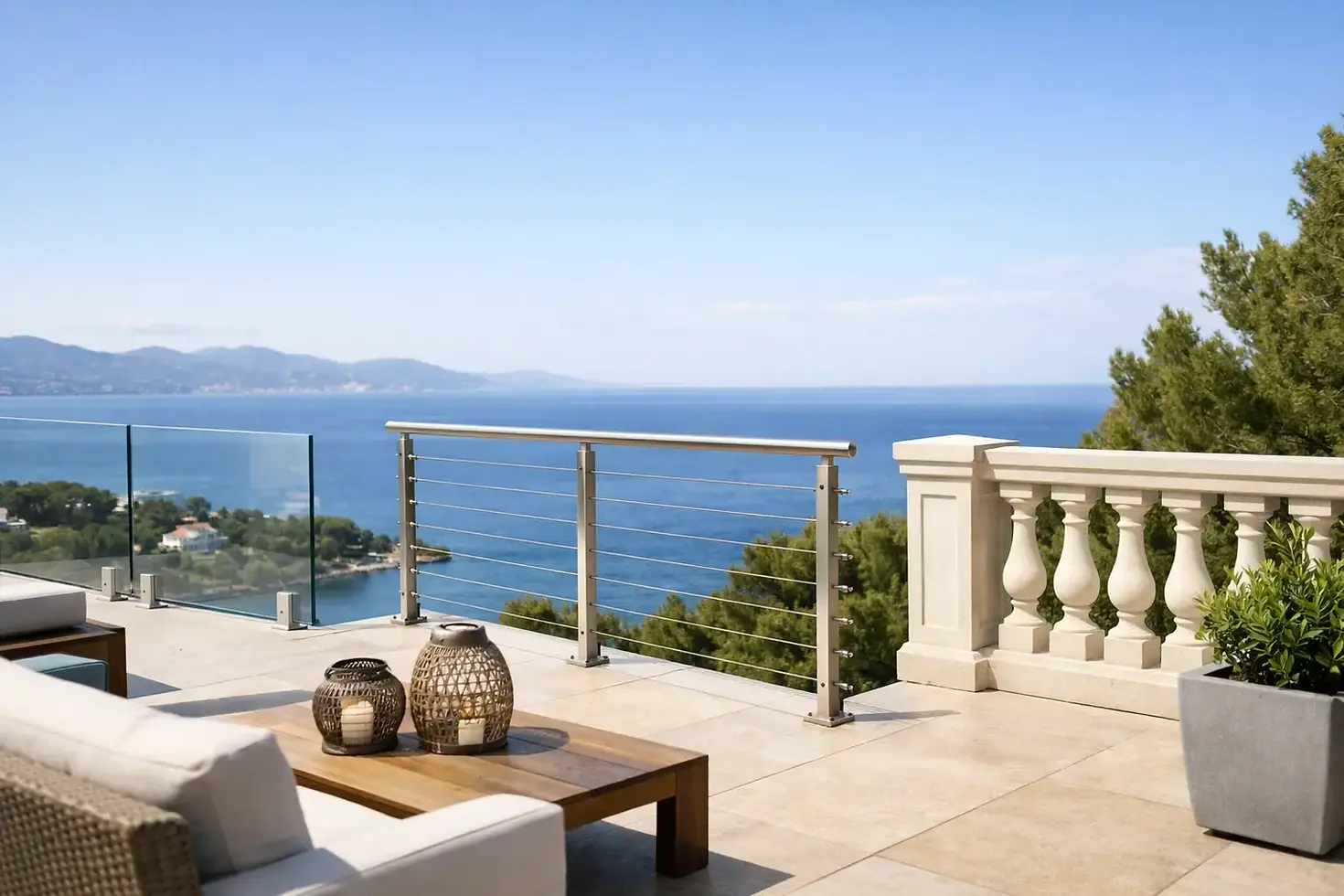
Best Balustrade Options for Terraces
A terrace can look finished on paper and still feel exposed in real life. The right barrier changes that immediately. If you are comparing the best balustrade options for terraces, the decision usually comes down to four things - appearance, safety, maintenance and budget. Get those right, and the balustrade does more than meet a requirement. It improves the whole space, protects the edge properly and adds value to the property.
For homeowners, that often means balancing clean design with day-to-day practicality. For builders and developers, it means choosing a system that installs efficiently, meets the spec and stands up to weather. The best option is not always the cheapest upfront. It is the one that suits the terrace structure, exposure level and finish you want to achieve.
Best balustrade options for terraces: what actually works
Terraces vary hugely. A small rear extension roof terrace has different demands from a raised flat terrace or a commercial outdoor space. That is why material choice matters.
In most UK projects, the main options are frameless glass, stainless steel and glass, aluminium systems, and more traditional steel balustrades. Timber does appear occasionally, but for exposed terraces it is usually not the strongest long-term choice if you want low maintenance and a modern result.
Frameless glass balustrades
If the priority is uninterrupted views and a high-end look, frameless glass is usually the strongest option. This system uses toughened laminated glass fixed into a base channel or specialist fixing arrangement, creating a clear barrier without upright posts breaking the line.
For terraces with a view, frameless glass is hard to beat. It keeps sightlines open, allows more natural light through and gives the space a clean architectural finish. On residential projects, it works particularly well on roof terraces, patios and balconies where the client wants the area to feel larger and less boxed in.
The trade-off is cost. Frameless systems are generally more expensive than post-and-rail alternatives, and the supporting structure needs to be suitable for the fixing method. Glass also shows marks more readily than metal, so if the terrace is exposed to rain, dust or lots of use, regular cleaning will be part of ownership. That said, many customers accept that because the finished result is stronger visually than almost any other system.
Stainless steel and glass balustrades
This is one of the most practical choices for a wide range of terrace projects. The system combines glass infill panels with stainless steel posts and handrails, giving a modern appearance while keeping the overall cost below fully frameless designs.
For many customers, this is the sweet spot. You still get an open feel and strong light transmission, but with a more structured frame and straightforward installation approach. Stainless steel is especially popular because it suits contemporary properties, performs well externally and offers a durable finish when the correct grade is used. For coastal or highly exposed sites, material quality matters even more.
There is also more flexibility in design. You can choose different handrail profiles, post layouts and glass panel sizes depending on the terrace shape and loading requirements. For builders and self-install buyers, component-based systems can make planning and fitting more manageable without losing the premium look clients expect.
Aluminium balustrades
Aluminium balustrade systems are a strong contender when weight, maintenance and price all matter. They are widely used on terraces where a lighter structure is helpful, or where a powder-coated finish is needed to match other external elements such as doors, windows or fascias.
A well-made aluminium system can give a neat, modern look with less upkeep than painted mild steel. It does not rust in the same way as untreated steel, and it can be a practical option for residential and mixed-use developments where consistency across multiple plots is important.
The main consideration is appearance. Aluminium can look excellent, but it does not always deliver the same premium feel as glass-heavy systems or satin polished stainless steel. If the terrace is a major selling feature of the property, some clients still prefer the visual quality of glass with stainless steel detailing. If the brief is more budget-conscious and performance-led, aluminium often makes sense.
Mild steel or bespoke metal balustrades
Traditional steel balustrades still have a place, particularly on projects with a more industrial, heritage or architectural metalwork style. They can be fabricated in bespoke patterns, finished in a wide range of colours and designed to suit awkward terrace layouts.
This route can work well when the balustrade needs to tie in with gates, staircases, railings or other fabricated steel features on the site. It is also useful where a more solid visual boundary is preferred over transparency.
The downside is maintenance and finish quality. External steel needs proper treatment and coating to prevent corrosion, especially in exposed conditions. Over time, it may require more attention than stainless steel, glass or aluminium systems. It can also make a terrace feel more enclosed, which is not always ideal on smaller spaces.
Choosing the best balustrade options for terraces by project type
The right system depends on the terrace itself, not just the brochure image.
For a domestic garden terrace or raised patio, stainless steel and glass often offers the best all-round balance. It looks smart, keeps the area open and provides a dependable barrier without pushing cost too far. If the property has a strong view or a premium architectural finish, frameless glass is often worth the extra investment.
For roof terraces, especially in urban settings, wind exposure and structural fixing become more important. Frameless glass can still be the right answer, but only if the supporting build-up and edge detail are suitable. In some cases, a post-supported glass system is the more practical route because it simplifies engineering and controls cost.
For flat developments and larger residential schemes, aluminium and stainless steel systems are both common choices. Developers usually need something repeatable, compliant and visually consistent across multiple units. That often points towards a modular system that is easy to price, manufacture and install at scale.
For commercial terraces, durability and throughput matter. The balustrade needs to cope with heavy use, cleaning regimes and stricter practical demands. In those settings, a well-specified stainless steel and glass system often delivers the best balance of appearance and long-term performance.
Safety, compliance and specification matter as much as style
A terrace balustrade is not just a design feature. It is a safety-critical element. Height, loadings, glass specification, handrail requirements and fixing details all need to be right for the application.
That is where many cheap off-the-shelf comparisons fall apart. Two systems can look similar online and perform very differently on site. The grade of stainless steel, the thickness and type of glass, and the quality of the base fixing all affect lifespan and compliance. On exposed terraces, cutting corners tends to show up fast.
For trade buyers, that means checking the technical detail early. For homeowners, it means buying from a specialist who can advise on the full system rather than just supplying panels and hoping the rest works itself out. A balustrade should be manufactured and specified to suit the project, not forced into a terrace it was never designed for.
Cost versus value
Price always matters, but terrace balustrades are a classic case where cheapest can become expensive. A low-cost system that stains, loosens, corrodes or looks dated after a short period is poor value.
Frameless glass sits at the premium end, but it can transform the finish of a terrace and add real appeal to the property. Stainless steel and glass is often the strongest value choice because it gives a modern result, strong durability and more manageable costs. Aluminium can be excellent for larger schemes or lighter structures. Bespoke steel works where design character matters more than minimal maintenance.
If you are comparing quotes, look beyond the headline number. Check what grade of steel is being used, whether glass is toughened laminated, what fixing system is included, and whether fabrication and installation support are available. Those details make a major difference.
Getting the terrace right first time
The best balustrade is the one that suits the building, the exposure and the way the terrace will actually be used. There is no single answer for every project, but there are clear front-runners depending on the brief. Frameless glass leads on clean sightlines. Stainless steel and glass is the strongest all-rounder. Aluminium suits practical, repeatable installations. Bespoke steel works where style calls for it.
If you want a system that looks right and performs properly, it pays to deal with a specialist that can handle bespoke manufacture, supply and fitting as one package. UK Glass Products works with homeowners, builders, developers and trade buyers across the UK, offering technical support, competitive pricing and balustrade systems built for real projects rather than generic guesswork.
A terrace should feel secure without feeling shut in, and that usually comes from choosing a balustrade with the same care as the rest of the build. If you are pricing up a project now, get clear on the finish you want, the structure you are fixing to and the level of support you need, then ask for a proper quote based on the actual site conditions.


Comments