

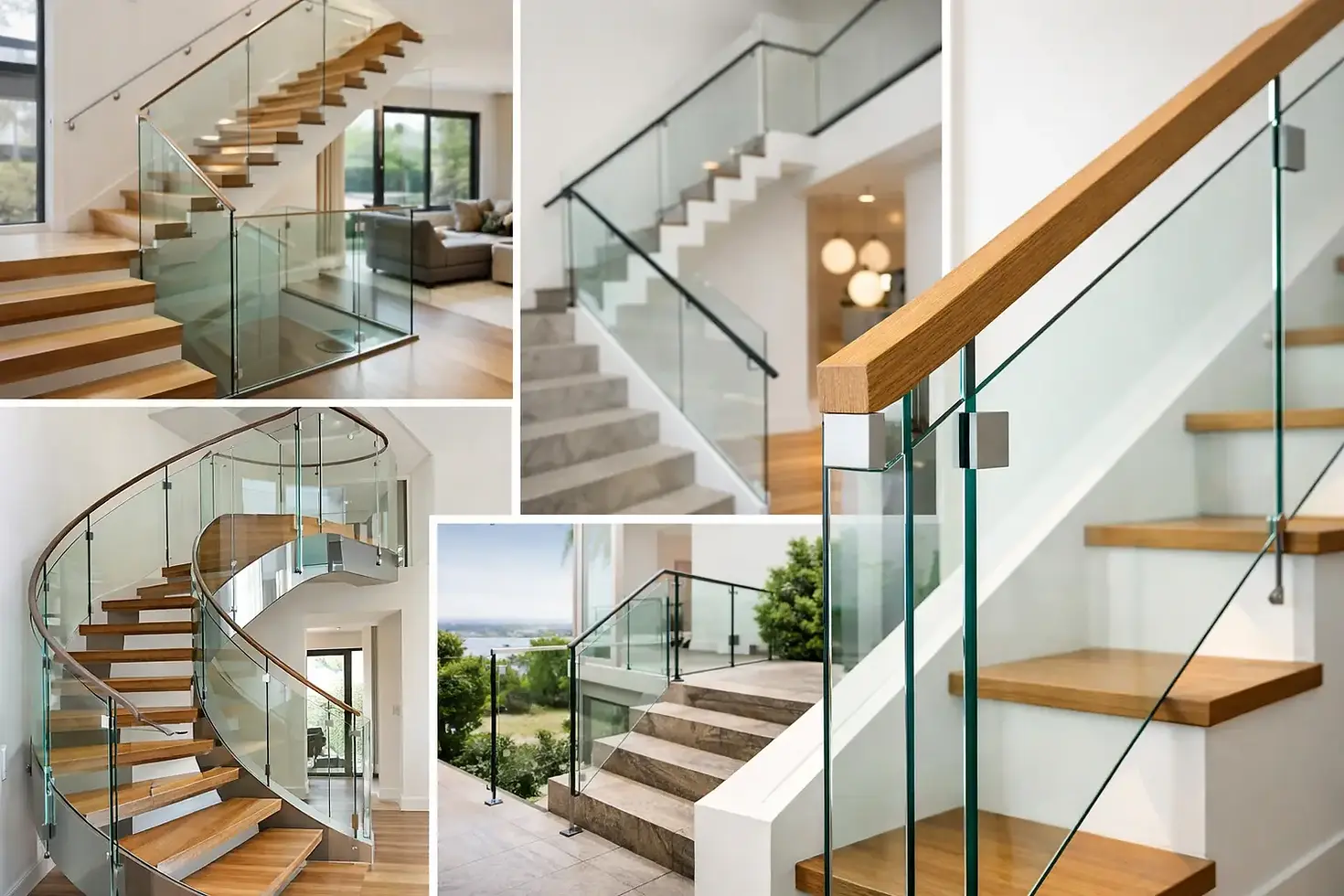
10 Best Staircase Glass Panel Ideas
A staircase can either make a property feel tight and dated, or it can open the whole space up. That is why the best staircase glass panel ideas are usually the ones that improve light, sharpen the finish of the stair run and still work properly for everyday use. For homeowners, builders and developers alike, the right glass staircase detail is not just about appearance - it affects maintenance, safety, installation method and budget.
Glass panels on staircases suit far more than ultra-modern builds. Used properly, they work just as well in extensions, refurbishments, commercial interiors and mixed-material schemes where timber, steel or stainless steel all need to sit together cleanly. The key is choosing a system that fits the property, not forcing a design trend into a layout that does not support it.
Best staircase glass panel ideas for different property styles
The strongest results usually come from matching the glass panel style to the architecture around it. In a contemporary new-build, frameless glass panels create the cleanest sightlines and keep the staircase visually light. This approach works particularly well where open-plan living spaces rely on borrowed light from rear glazing or rooflights.
In a more traditional property, fully frameless is not always the best answer. A staircase with stainless steel posts and glass infill panels often gives a more balanced finish. You still get the openness of glass, but the visible structure can feel more in keeping with period features, painted timber joinery or existing handrails.
Commercial and multi-unit residential projects often need a more practical middle ground. Toughened and laminated glass panels with stainless steel fixings provide a modern look while keeping the system durable and straightforward to specify. When the staircase will see heavier daily use, that extra structure can be the sensible choice.
Frameless staircase glass panels
If the brief is minimal, frameless glass is usually the first option worth considering. It gives the sharpest appearance and keeps visual clutter to a minimum. This style is especially effective on straight staircases where the line of the treads and handrail can do most of the design work.
The advantage is obvious - more light, cleaner lines and a premium finish. The trade-off is that frameless systems require proper planning. Base fixing details, glass thickness, edge alignment and handrail requirements all matter more when there is no framework to hide poor tolerances. For refurbishment jobs, that can affect labour time and cost.
Frameless glass also tends to suit properties where the staircase is a feature in its own right. If the stair is boxed into a narrow hallway, the visual benefit may still be there, but it might not justify the additional spend compared with a post system.
Glass panels with stainless steel posts
This is one of the most practical staircase glass panel ideas for buyers who want a modern finish without the higher cost of a fully frameless installation. Stainless steel posts with clear glass panels give you a clean, reliable system that works in domestic and commercial settings.
It is also a good option for projects where durability and straightforward fitting matter as much as appearance. Posts provide clear fixing points and can simplify installation on awkward stair runs or where the existing structure is less than perfect. Satin polished 316 grade stainless steel is particularly popular because it gives a high-quality finish and strong long-term performance.
From a design point of view, this style works well when you want the staircase to look smart and current without becoming overly architectural. It pairs neatly with timber treads, stone flooring and stainless steel handrails.
Frosted or tinted glass for added privacy
Clear glass is the standard choice, but it is not the only one. Frosted or tinted panels can be a better fit where privacy matters, or where the staircase sits very close to living areas, office spaces or neighbouring sightlines. In some commercial interiors, a lightly tinted finish can also give a more distinctive look without sacrificing the clean geometry of glass.
That said, privacy glass changes the feel of the staircase. It reduces transparency, so you lose some of the open effect that makes glass so appealing in the first place. In smaller homes, that can make the staircase feel heavier than clear panels would. For most residential projects, frosted or tinted sections work best when used selectively rather than across every panel.
Staircase glass panels with timber handrails
Not every staircase needs to look industrial or ultra-modern. One of the most effective ways to soften glass is to combine it with a timber handrail. This gives you the openness of glass with a warmer finish that suits family homes, barn conversions and higher-end residential refurbishments.
Oak is a common choice, but the principle matters more than the species. Timber handrails can help bridge the gap between traditional interiors and contemporary balustrade design. If clients like the idea of glass but worry it may feel too cold, this combination usually solves that problem.
The detail needs to be handled properly. Timber brings warmth, but it also introduces another finish to coordinate. If the treads, doors and flooring all use different tones, the staircase can start to look pieced together rather than designed.
Curved or bespoke shaped glass panels
For staircases with turns, landings or more ambitious architectural layouts, bespoke glass panels make a real difference. Curved or shaped glass can follow the stair line accurately and give the whole installation a much more resolved finish than standard rectangular panels forced into a complex space.
This is where manufacturing experience matters. Bespoke panels need accurate surveying, proper templating and solid technical backup. For developers, contractors and homeowners working on one-off builds, it is usually worth getting the system designed around the staircase rather than trying to adapt an off-the-shelf arrangement.
The obvious trade-off is cost. Bespoke fabrication is not the budget option, and lead times may be longer than for standard panel sizes. But where the staircase is central to the project, cutting corners on the balustrade usually shows immediately.
Glass side-mounted to maximise tread width
Where staircase width is tight, side-mounted glass is often the smarter solution. Instead of fixing the panel on top of the string or stair structure, the glass is mounted to the side. That keeps more usable width on the stair itself and can make a compact staircase feel less restricted.
This approach is popular in smaller residential layouts, loft conversions and renovation work where every millimetre counts. It also creates a crisp visual line because the top edge of the glass can run cleanly alongside the handrail.
Not every staircase can take side fixing without additional support, so this is one of those areas where the existing structure needs checking early. The visual result is excellent, but the fixing detail must be right.
Mixing glass with steel features
For clients who want more definition, glass does not have to stand alone. Combining staircase glass panels with steel stringers, stainless steel clamps or metal feature posts can create a stronger design statement. This works especially well in commercial properties, contemporary homes and developments where the staircase needs to look premium but hard-wearing.
The benefit here is balance. Glass keeps the stair open, while steel introduces structure and character. Done well, the result feels engineered rather than decorative. Done badly, it can look overcomplicated. The safest route is to keep the palette tight and repeat the same metal finish consistently.
Practical points before you choose
The best staircase glass panel ideas are only good ideas if they can be installed properly and comply with the job requirements. Glass type, panel size, fixing method, handrail detail and building use all need to be considered early. A domestic feature staircase has different demands from a shared access stair in a larger development.
Maintenance is another factor buyers sometimes overlook. Glass is easy to clean, but it will show marks more readily than timber spindles or solid balustrade panels. In busy homes with children, pets or frequent use, this is worth considering. Clear glass looks excellent, but it does need routine cleaning to stay looking sharp.
Budget also matters, and there is no point pretending otherwise. Post-and-glass systems are often the best-value route for customers who want a strong modern look without pushing the project cost too far. Frameless and bespoke systems deliver more visual impact, but they need a bigger allowance and more careful planning.
Getting the right result from your staircase glass panels
The right staircase glass solution should suit the building, the budget and the level of finish expected. Some projects need a straightforward supply-only system that can be installed efficiently on site. Others need bespoke fabrication, survey support and professional fitting to get the details right first time.
That is where a specialist supplier makes a difference. Whether the requirement is a fully fitted staircase glass system or a supply-only package for trade and self-install buyers, the best outcome comes from accurate measurements, dependable materials and clear technical advice. UK Glass Products works with homeowners, builders and developers across the UK on exactly that basis - practical systems, competitive pricing and support that makes the buying decision easier.
If you are weighing up staircase options, start with the layout you have, the finish you want and the level of support the job needs. Once those three points are clear, the right glass panel design usually becomes obvious.


Comments